


The global economic expansion remained intact over the September quarter, supported by healthy manufacturing and services activity. Importantly, this cycle continued to be driven less by traditional consumer spending and more by business investment and powerful structural themes. Artificial intelligence, infrastructure, defence, energy security and more resilient supply chains attracted significant capital, helping support economic growth as household spending moderated.
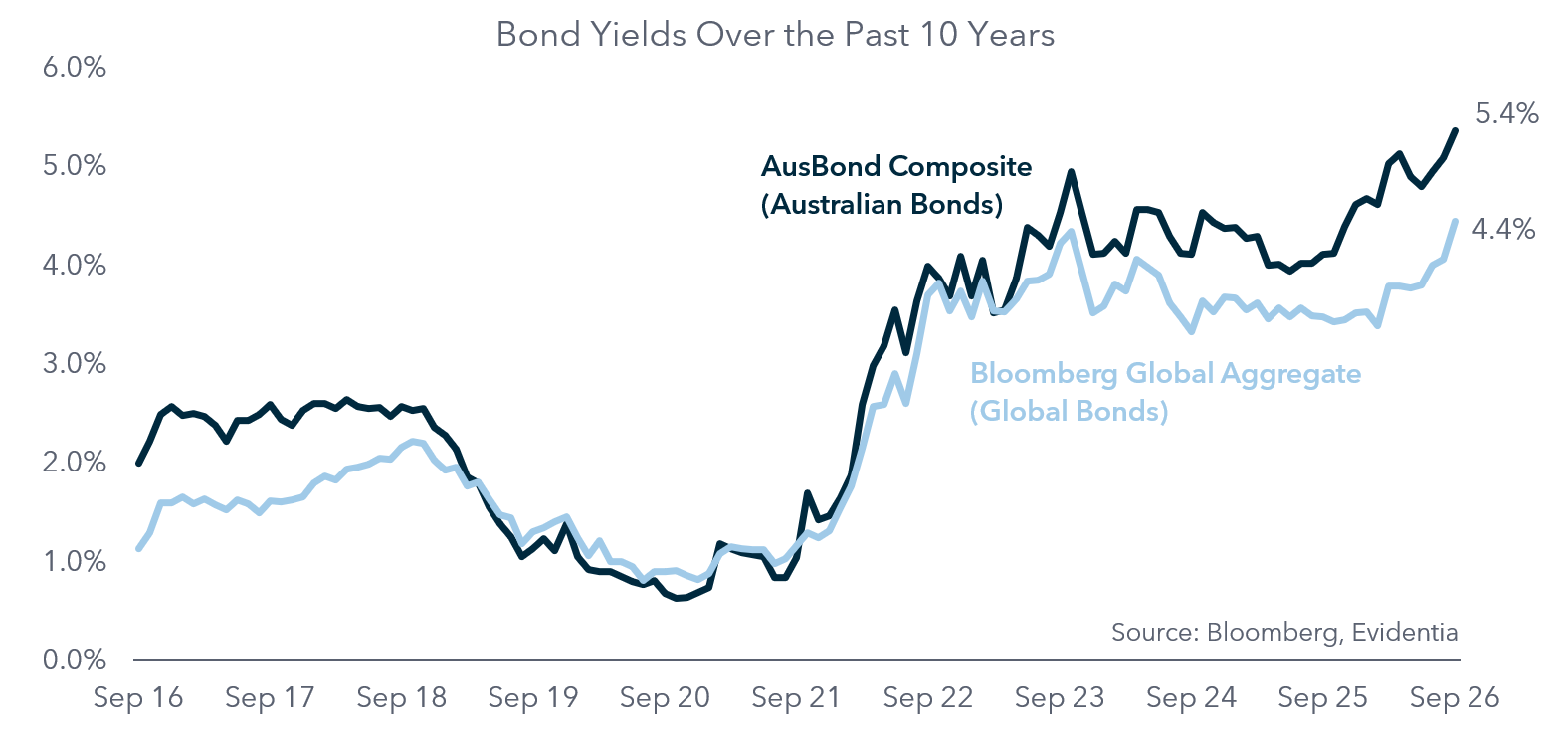
At the same time, government bond yields rose sharply over the quarter as large fiscal deficits, increased government borrowing and persistent inflation kept interest rates higher. Rather than causing a broad economic slowdown, higher borrowing costs increasingly separated stronger businesses from more vulnerable ones. Large US technology companies remained well placed, with strong cash flows supporting continued investment in AI, while more highly indebted and lower-margin businesses faced greater pressure from rising debt costs.
The consumer also remained increasingly two-speed. Cost-of-living pressures and fading pandemic-era savings caused more indebted households to reduce discretionary spending. Meanwhile, wealthier and less indebted households continued to spend, helping overall consumption remain resilient despite growing pressure beneath the surface.
Australia faced a more challenging backdrop. Higher interest rates and cost-of-living pressures weighed more heavily on households, while earnings growth outside resources and parts of the banking sector remained subdued. Unlike the US, the Australian share market has less exposure to the technology and structural growth themes helping offset the impact of higher interest rates globally, increasing the importance of careful company selection.
Looking ahead, continued economic growth and structural investment provide reasons for optimism, but higher bond yields, uneven consumer conditions and demanding valuations leave less room for disappointment. This environment favours diversification, earnings quality and valuation discipline, while higher bond yields offer improved income and potential portfolio protection if economic growth slows.
As we have reached the end of another financial year, we wanted to send a reminder about income distributions.
Last night’s Federal Budget has created debate and discussion and much has been published regarding this budget which contains significant changes.